The cultural theorist, Raymond Williams, in his book Keywords, described culture as “one of the two or three most complicated words in the English language.”1 Partly due to its highly subjective nature, the complexity of culture and more specifically art is closely linked to its elusive and ever changing definition.
In an attempt to pin down culture if only briefly, this paper will explore two rather complicated cultural events annually produced in the Greater Rochester, NY region, they are the Park Ave Summer Art Fest and the Scottish Highland Gathering at Genesee Country Village & Museum. Identifying the various external forces affecting the final product, or in this case experience, of each event and through the application of John Pick’s aesthetic contract, that is bringing together the best possible art and the best possible audience under the best possible circumstances2, I hope to ultimately gauge the success or failure of each event. As success, like art, tends to be an elusive term that is difficult to define, our criteria for success here will be in upholding the aesthetic contract and meeting the advertised or suggested claims set forth by each event’s producer.
Moreover, I am also interested in answering the following questions: does higher attendance denote a more successful cultural event; what principles make a commercial event such as the Park Ave Fest so popular and how can those principles be applied to a less popular though more meaningful bucolic event without stripping it of its cultural integrity? By bucolic I am referring to something that is meaningful to members of a particular society, transmitted informally to the very young, that is not budgeted or marketed and does not form part of a traditional economy. Commercialized culture by contrast does form part of a traditional economy as a transaction takes place. Whereas the mindset attached to the bucolic arts is primarily that of the enrichment of a particular society, commercial arts are produced to elicit some sort of a gain whether that be recognition or wealth.
In approaching the first task of identifying the external forces affecting the production and presentation of the events mentioned above, a detailed familiarization is needed within which to contextualize these forces. For the sake of clarity, by external forces I am referring to those influences in place, which define Pick’s circumstances under which the audience and the art meet. Pertaining to these events, those factors include but are not limited to: event location and the various surrounding landscapes; transportation available to the audience; and the class one belongs to, which might affect participation in fee-based activities.
The first cultural event we will examine, The Park Ave Summer Art Fest, is a two-day commercial event attracting an annual audience of over 250,000 people to the Park Avenue Neighborhood in Rochester, NY. For its 33rd year in existence, 2009, it boasted an offering of over 300 artists, craftsmen, vendors and exhibitors and over 60 musical entertainment groups. The show is hosted by the Park Avenue Revitalization Committee and produced by the Springut Group, a for-profit corporation specializing in entertainment management and marketing. The official website for the Park Ave Fest, which interestingly also doubles as the official website of the Springut Group, states that the event was “voted Rochester’s liveliest and most popular annual summer event,” though, no source is presented along with this claim nor has my research surfaced such a bestowal. Springut promises the festival to be a unique cultural event both centered on the arts and promoting the diverse offerings of the Park Avenue Neighborhood.3
Situated in the heart of one of Rochester’s most popular and energetic neighborhoods the Park Ave Fest is easily accessible by most means of transportation including by foot, public transportation and car. The event provides free off-site parking at two locations and in addition provides a free shuttle service between the event and its advertised parking. Admission to the festival is free and enjoyment of the sixty plus musical groups is free as well. Because of its integration into the physical landscape of the city and because of its pricing policy, the festival does not exclude those of any class in participating at the very basic level of the event. An individual could essentially gain entry to the event and partake in many activities without feeling the confines of class lines. That being said class separation does exist when we take into consideration the fee based activities within the festival, the many vendors, visual artists and craftsmen that account for the majority of the festival’s content.
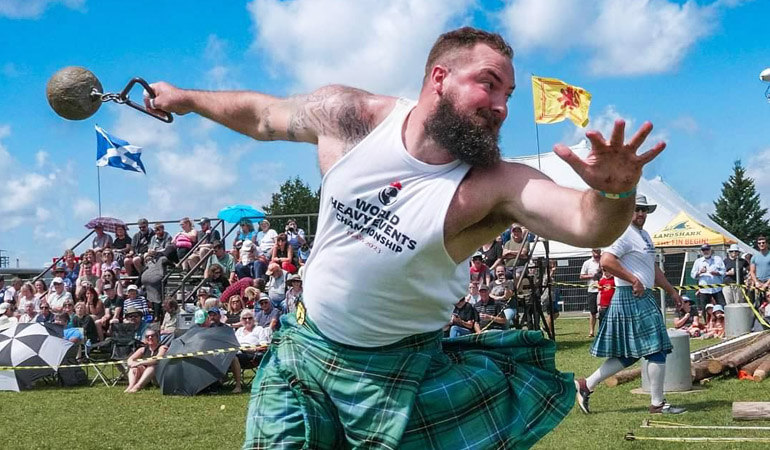
Alternatively, the Scottish Highland Gathering at Genesee Country Village & Museum is a celebration of Scottish heritage, the activities of which are highly specialized and meaningful mostly to those of Scottish descent. Similar to the Park Ave Fest, the Gathering also takes place in the summer over a two-day period, though it does not enjoy the same numbers of high attendance. Activities include highland dancing, a tartan4 parade, marching bands and a sale of Scottish goods. The event is produced by the Genesee Country Village & Museum, a not-for-profit organization charged with providing visitors with “meaningful insights into the origins of customs, traditions, social values and the evolution of our contemporary lifestyles.”5
The Genesee Country Village & Museum is located in Mumford, NY, twenty miles from downtown Rochester. Since public transportation is not available between Rochester and the museum, the event is only accessible by car. Admission to this event is not free and costs $7 for an adult ticket. This price barrier in addition to the specialized content of the Gathering and limited transportation options seem to act counterproductively against the events favor, sending a message to those who may be interested in attending that this is an exclusive event solely for those who are of Scottish descent, who can afford the ticket price and are able to secure transportation to the museum. Though the fee is minimal and set to the cost of regular museum admission, there is an air of exclusivity that precludes the attendance of those within a particular class unable to meet the above criteria for attendance. However, one might argue that this exclusivity ensures that the Highland Gathering does not fall into the same commercial trap that the Park Ave Fest does. The observable barriers of location, price, and transportation ensure that only the best possible audience is in attendance. Notwithstanding that I do recognize the fact that the Highland Gathering fulfills the best possible audience dictate of the aesthetic contract, there is room here for improving the accessibility of the event to larger numbers of members within this cultural group that might be excluded by the forces discussed above.
Another important factor we must recognize affecting the presentation of these events is that a common expectation of most summer festivals in the US is the availability of alcoholic beverages. Though the Park Ave Fest is promoted as a non-alcoholic event, interestingly throughout Rochester, it is very much associated with wide spread drinking parties and intoxication. A recent article in the Rochester daily paper reported that, “Officers dispersed 27 parties between 6 pm Saturday and 3 am” Sunday during this year’s festival.6 Not only do these parties as an external force tarnish the image of the festival but they also flavor ones experience of the event. Due to the fact that many of these parties take place on the porches of homes that reside on the street within which the festival is taking place, both parties and festival tend to overlap. One could view these Park Ave porch parties much like pre-game parties in American Football culture where a group of people congregate at a centralized place and drink in preparation of their enjoyment of the impending football game. Replace the football game with the Park Ave Fest and we have an ideal comparison. With intoxicated college age as well as older adults coming together with sober men and women of all ages the chances that problems will ensue are certain. Here we begin to see the breakdown in the aesthetic contract where the best possible audience is not in attendance.
Conversely, though drinking is an essential part of the Highland Gathering, you would be hard pressed to find Scotsmen together and not drinking at least a dram or two, it is an integrated part of not only this event but also the Scottish culture. This seems to lessen the possibility that it might interfere with the quality of the Gathering, as do the rogue parties surrounding the Park Ave Fest. For various reasons, one being open container laws in New York State preventing drinking in non-contained public areas, integration of the drinking culture into the Park Ave Fest is simply not possible. Were these laws not in effect or if designated drinking areas were provided at the festival, would it lessen the negative effect alcohol consumption has on the final product of the Park Ave Fest? I am not altogether sure as this touches on a deep seeded cultural and political issue. In my opinion it would take years following the lax of government restrictions, including age of legal consumption to see a positive change here. At best this force can currently only be managed and not completely overcome.
The brief analysis above has given us a framework within which to contextualize some of the many external factors at play in the production and presentation of both the Park Ave Fest and the Highland Gathering. Building upon this descriptive framework we can now move into more of an analytical realm to further assess each event’s coherence to its unique aesthetic contract and ultimately its success as set out at the beginning of this paper.
On the surface one might perceive the Park Ave Fest as a celebration of community and bucolic artistry organized to enhance and showcase the creativity of a specific locale. This is suggested not only in the title of the festival but also in its marketing efforts. However, upon further investigation of the actual event we begin to see rather blatant signs that the bucolic nature of this festival is an intricate façade rather artfully erected over a commercial framework. Those 300 plus “artists,” vendors and exhibitors reside in over 21 states and even Canada. This brings into question the validity of the event and its claim to represent the Park Avenue Neighborhood. If the purpose of the festival truly is, to promote the uniqueness of the Park Avenue Neighborhood then should not the very content of the event represent the creativity and artistry of said neighborhood? In addition, because of their various residences it seems as if most of the exhibitors and artists at the Park Ave Fest create their self-dubbed unique products apart from considering the tastes of the intended local audience and in purchasing a booth at a festival such as this one cast the net as far as possible to hopefully snare as many consumers as possible. This suggests that the best possible art is not being presented to the best possible audience.
The producers of the festival claim to circumvent this issue by their use of a competitive application process that should in effect target the right art for the audience the producers market to. Furthermore, with the festival in its 33rd year one might argue that those in attendance by now know what to expect. With this assumption of audience expectation added to the event’s popularity, it may seem easy to conclude that neither the art nor the artist breaks the aesthetic contract. However, I would disagree in that even though an audience has been trained to expect a certain level of artistry this does not mean the best art is being presented. It is well known and documented that the desire to congregate and connect is in inherent need for humanity. As John T. Cacioppo, neuroscientist and psychologist at the University of Chicago concluded after three decades of study, “We survive and prosper, and our genes survive and prosper, only because we are socially connected to each other.”7 Given the promise of an easily accessible outdoor festival with free admission and free musical events, in addition to the potential to connect with a large group of people, attendance is bound to be high. Unfortunately the only figure that might shed light on the suitability of the art for the festival goers, which I am not privy to, is the percentage of people attending the festival who also purchased something from one of the artists and/or craftsmen.
From my own observations, many of the “arts and crafts” presented at the Park Ave Fest seem to be random products that could easily be recreated by any amateur artisan with a trip to the local craft supply store and the help of instructions found on the internet. If this is the case, by using the word art in its title the event promises a level of sophistication that it sadly falls short of. Moreover, it diminishes art to a mere commercial transaction. Ellen Dissanayake would agree with this misuse of the label “art” when she states that, “art is a value-laden term we use carelessly and misleadingly like “madness.”8 It seems as though that in the case of the Park Ave Fest the primary concern of the artists and craftsmen is that of profit maximization at the expense of meaningful effective art.
I have come across no better example of this commercial nature of the Park Ave Fest than one particular vendor selling his wares of ice cold drinks at the most recent festival. His booth consisted of a simple white canopy tent, a few crudely hand drawn signs, four ice filled coolers and a proverbial soapbox. In a scene P.T. Barnum would appreciate, the vendor atop the soapbox with his fist full of one-dollar bills screams, “Just give me the money as if you were buying nothing…Get your money out, don’t think. Come-on.”9 Is this not essentially what the host and producers of the Park Ave Fest are saying to the festival goers? Do they even care whether or not they bring together the best possible art and the best possible audience? The evidence above suggests that they are more concerned with increasing the economic power of the Park Avenue Neighborhood than fulfilling the aesthetic contract. Just as the for-profit mission of the producing company drives its business, the Park Ave Fest acts as a commercial engine driving commerce in the Park Avenue neighborhood. Instead of pulling the proverbial wool over the publics eyes only confirming Jackson Lears idea that commercialism of art leads to deceitful advertising10 would it not be better for the Springut Group to be honest with those attending its event and admit the festival is simply a vehicle to strengthen the economic vitality of the Park Avenue Neighborhood?
After such a harsh critique of the Park Ave Fest it seems difficult to address the faults of the Highland Gathering as it possesses a purity that is unadulterated by the commercial based faults which plague the Park Ave Fest. Nevertheless, the Highland Gathering does fall short of the aesthetic contract. As we have seen, the exclusivity of this event can work negatively against its success. The producers of the Highland Gathering even if expanding their audience solely with those of Scottish descent need to be aware of context at all times. In my experience there are people belonging to this group who have little exposure to its culture. To one of these inexperienced members let alone someone not of Scottish descent, viewing a full-grown masculine male dressed in a kilt11 toss a fifteen-foot wooden pole about might be a confusing duality. As David Napier suggests in his book Foreign Bodies, “symbols must be contextualized in order to achieve meaning.”12 That is, within the context of Scottish culture and more specifically that of the Highland Gathering the man mentioned above is an athlete competing in an event known as the caber toss13 and wears not only the traditional clothing of a Scotsman but a signifier of his specific family name and ancestry. Without the context of Scottish culture, and holding that we are still in America, these athletes may simply be seen as men in skirts tossing about a wooden telephone pole.
In all, I have attended the Highland Gathering a total of four times. Throughout those four years the produced event has remained relatively the same size each year by presenting the same artists and athletes as well as the same vendors. At some point this familiarity turns to monotony as the same visitors experience the same event over and over. If one wishes to attract the same visitors year after year, the event must evolve in some manner. The quickest and most effective way for this to happen is to invite new artists and vendors, growing the event to a larger and more exciting size. Simultaneously marketing efforts need to increase and broaden to attract a larger audience. Unfortunately over the years I have seen a decline in the attendance of the event. In researching the Gathering for this paper the Genesee Country Village & Museum website sadly revealed no information for a 2009 Gathering. Given my observations I wonder if it had been cancelled because of dwindling attendance. Though the Highland Gathering brings together the best possible art with the best possible audience these findings suggest it fails to do so under the best possible circumstances.
In an extreme sense, considering the analysis throughout the paper, we might view the Park Ave Fest as a commercial engine fitting us with the shackles of materialism and the Highland Gathering as a bucolic celebration enriching our understanding of culture and community. Fortunately we as arts managers have the insight of Joli Jensen when personal opinion threatens to criticize art too harshly. Jensen encourages us to not view art as instrument, narrowly categorizing it into good and bad art.14
With Jensen in mind, is not the point of culture and festivals such as these in particular, to organize and bring us closer together as a society? If this were to be our measure of success then we could agree that both events were successful. The Park Ave Fest brings together over 250,000 people under the auspices of a community event centered on the arts, using a specific, unique neighborhood as venue. This of course as we have discovered for commercial ends. However, even with its deceitful intentions and aside from the fact that it exists on a superficial level the festival does succeed in providing a venue for human interaction and connecting. The Scottish Highland Gathering alternatively does bring together the best possible audience and the best possible art in a meaningful and effective way. However, it is too timid in its execution and fails to provide the best possible circumstances. Though both events have broken their respective aesthetic contracts there is most definitely room and the opportunity to improve.
In conclusion, to close the questions posed at the beginning of this paper, as can be seen through the example of the Park Ave Fest, high numbers of attendance do not necessarily translate into a successful cultural event. The producers of the festival ultimately failed to bring together the best possible art with the best possible audience. This is made evident by the artists’ and craftsmen’s failure to tailor their arts and crafts to local tastes and trends. Furthermore, we have found that what each individual event lacks, leading it to break its respective aesthetic contract, is ironically possessed by the other event. The Highland Gathering with a larger budget, increased marketing efforts targeted at Scots and by expanding the size of the event could potentially share the popularity that the Park Ave Fest enjoys without jeopardizing it’s integrity or the other two pieces of the aesthetic contract triad. The Park Ave Fest, by focusing on the creative talents of the Rochester region, only soliciting vendors from the area and truly integrating itself deeply into the community, rather than superficially concerned with commerce as it is now, could become a higher quality event providing meaning and to its attendees. So we not only can and should apply those effective principles in use by the commercial event to the bucolic event but the reverse is true also. In the words of Jensen, ultimately, “If we are to support the arts effectively, we need to understand how they might actually be important and valuable in themselves,”15 not in the service of commerce.
Notes
1. Williams, Raymond. Keywords: A Vocabulary of Culture and Society. Oxford University Press. 1985.
2. Pick, John. The aesthetic contract : the heart of arts management. Kenmore, NY, USA : Merrill Press, 2009. pp. 81.
3. Springut Group, Inc. “Park Ave Summer Arts Festival.” 2007, <http://www.rochesterevents.com/parkavefest/index.php> (15 Nov 2009)
4. Tartan is a pattern consisting of criss-crossed horizontal and vertical bands in multiple colours. Tartans originated in woven cloth, now they are used in many other materials. Tartan is particularly associated with Scotland. Scottish kilts almost always have tartan patterns.
5. Genessee Country Village & Museum. “About Us.” 2009. <http://www.gcv.org/about-us/> (15 Nov 2009)
6. Bennett, J. Loudon. “Several arrests made overnight after the Park Ave festival.” Democrat and Chronicle, 2 August 2009.
7. “Loneliness Can Kill You.” Forbes, 24 August 2009, v184 i3. pp2.
8. Dissanayake, Ellen. What is Art For? Seattle: University of Washington Press. 1988. pp. 59.
9. YouTube. “Give me your money!” 26 March 2007. <http://www.youtube.com/watch?v=H0KrzU0XSTY > (20 Nov 2009
10. Lears, Jackson. Fables of Abundance: A Cultural History of America. New York, NY: Basic Books. 1994. pp. 264.
11. The kilt is a knee-length garment with pleats at the rear, originating in the traditional dress of men and boys in the Scottish Highlands of the 16th century. Since the 19th century it has been associated with the wider culture of Scotland in general, or with Celtic (and more specifically Gaelic) heritage elsewhere. It is most often made of woollen cloth in a tartan pattern.
12. Napier, A. David. Foreign Bodies: Performance, Art and Symbolic Anthropology. Berkeley: University of California Press, 1992. pp. xvi.
13. The caber toss is a traditional Scottish athletic event practiced at the Scottish Highland Games involving the tossing of a large wooden pole called a caber, similar to a telephone pole or power pole.
14 – 15. Jensen, Joli. Is Art Good For Us? Lanham, Md.: Rowman & Littlefield. 2003. pp. 5.
Bibliography
Bennett, J. Loudon. “Several arrests made overnight after the Park Ave festival.” Democrat and Chronicle, 2 August 2009.
Dissanayake, Ellen. What is Art For? Seattle: University of Washington Press. 1988.
Genessee Country Village & Museum. “About Us.” 2009. <http://www.gcv.org/about-us/> (15 Nov 2009)
Jensen, Joli. Is Art Good For Us? Lanham, Md.: Rowman & Littlefield. 2003
Lears, Jackson. Fables of Abundance: A Cultural History of America. New York, NY: Basic Books. 1994.
“Loneliness Can Kill You.” Forbes, 24 August 2009, v184 i3. pp2.
Napier, A. David. Foreign Bodies: Performance, Art and Symbolic Anthropology. Berkeley: University of California Press, 1992
Pick, John. The aesthetic contract : the heart of arts management. Kenmore, NY, USA : Merrill Press, 2009.
Springut Group, Inc. “Park Ave Summer Arts Festival.” 2007, <http://www.rochesterevents.com/parkavefest/index.php> (15 Nov 2009)
Williams, Raymond. Keywords: A Vocabulary of Culture and Society. Oxford University Press. 1985.
YouTube. “Give me your money!” 26 March 2007. <http://www.youtube.com/watch?v=H0KrzU0XSTY > (20 Nov 2009
© 2009 Curtis Stedge
