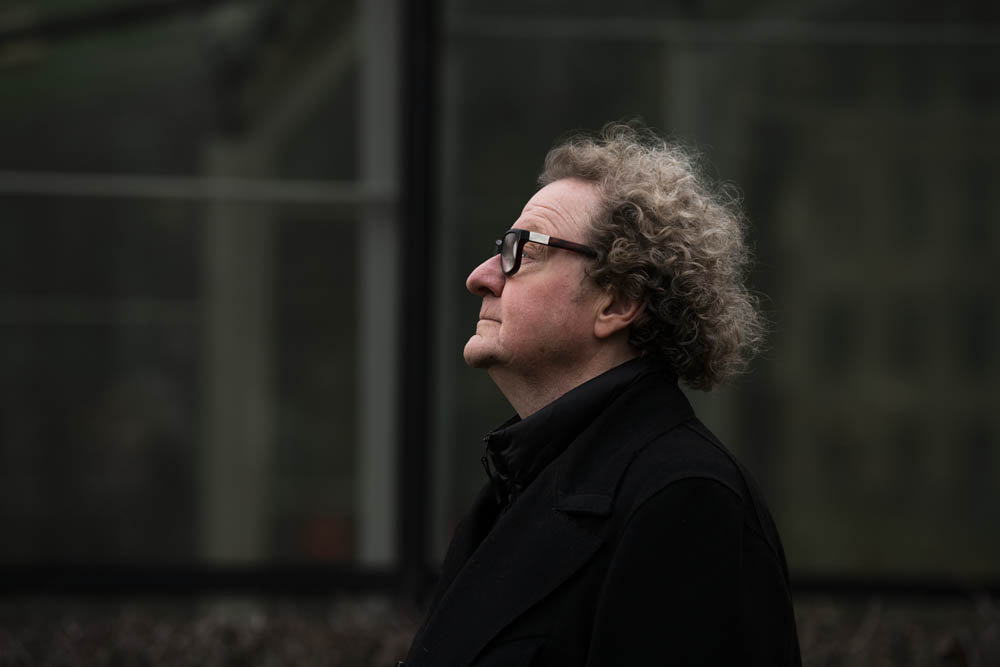
Pierre Guillet de Monthoux image of a Master of Business Art, a leader who through the aesthetics of art is able to manage a company with artistic insight and business savvy, finds inspiration in masters such as Wagner and Diaghilev. This leader of the future is a true artist of business capable of bridging the gap between the qualitative, creative and playful world of the arts and the quantitative, bureaucratic, profit driven world of business. This is what Guillet de Monthoux and The Nomadic University of Art, Philosophy and Enterprise in Europe, or NUROPE, collectively strive towards, educating the future leaders of the European continent.
As future leaders of Arts Management our NUROPE experience brings us to Venice, a city long known for its economic strength and cultural resources, a veritable melting pot for art and business. Could there be a more perfect place within which to apply Pierre Guillet de Monthoux theories of business art, what Antonio Strati terms the “artistic approach” to organization studies?
Throughout our time in Venice, in viewing Guillet de Monthoux’ film Masters of Business Art: A Fields of Flow Movie or MBA, while reading his book The Art Firm, at the Biennale and in being a part of the NUROPE experience, there are three key issues that have collectively and separately held my interest as a “Master of Business Art” in-training, “art cannot schwung on demand” (Guillet de Monthoux 2004): the disparity between the profit driven business world and the socially cognizant art world and finally form interferes with schwung.
In this brief document I will address the research of those who met with us in Venice that may be pertinent to the issues previously mentioned, most importantly that of Pierre Guillet de Monthoux himself, highlighting those points I believe to be of most importance and of course shaping my own opinions and presenting my findings. Because of their nearly inextricable nature it is difficult to address these three aforementioned issues completely separately, and therefore I will address them in an intertwining nature sometimes separately and other times collectively.
Consistently throughout my research the one issue that predominately keeps presenting itself is that form interferes with schwung. Let us not suggest here that all form prevents or limits schwung as form is necessary for schwung to exist, and any good artist knows that in order to break the rules you need to first master them. As Guillet de Monthoux (2006) points out in MBA, “…form and matter matters.” However, if we are not careful and view form as totalitarian then schwung is not possible.
Take, for example, the American education system where pass/fail ratios and graduation rates take precedence over true analytic inquiry and probing discussion, where teachers employ simple memorization and regurgitation of facts and figures. Of course, can these educators really be blamed when they too were raised by the Prussian system of social obedience? With critical thinking viewed as anti-patriotic and the vigorous pruning of arts in education programs from public schools, its no wonder the US education system has slipped to number 18 among other world nations. American education has lost its schwung. (UPI 2008)
In the business world this “plague” of form run amuck runs especially rampant. Henrik Schrat, in the film MBA, when speaking about his experience with the gap between formal business jargon and “art speak” during a meeting points out, “…Somebody realizes that you can speak a bit more relaxed and that you can use lots of private terms and don’t have to be polite and official. Then comes this fantastic thing with artists and organizations because that is not displaced at the moment. It gets passed on to the secretary or someone else and of course the tone you have found on a personal level doesn’t work anymore.” (Guillet de Monthoux 2006) In this case the formality of communication in business has brought down the iron curtain of form, stopping schwung dead in its tracks.
This is precisely the territory that NUROPE and the Arts Management program, at The State University of New York at Buffalo, have ventured into and have come out the other side of victoriously. Yes, there is a definite form to both, but this form does not limit those who engage it nor their playful creativity. Quite the contrary, they encourage nomads and students respectively to question what is generally accepted and to view any and every situation as an opportunity for growth and learning.
The key to NUROPE is that the traditional form of an educational institution has been discarded. The walls of the university have been demolished giving way to a borderless school without walls. Nomads are given a folding chair to represent that learning may take place anywhere, a notebook representing individual reflection and then gather around a rather large and heavy yet portable glass table representing communal discussion and reflection. (Kristensson Uggla 2006) This facilitates an opening of the creative process no longer hampered by bureaucratic rules and regulations. Learning may be carried out anywhere at anytime from a small hotel room-cum-lecture space to the grand galleries of the Venice Biennale. Whereas the American education system has become form obsessed and schwung-free, so to speak, NUROPE finds its success in limited form, which allows for schwung maximization.
This threat of form preventing or interfering with schwung was also highlighted by Luca Zan, during his lecture to the SUNY-NUROPE group, in his belief that a mission statement has the ability to control or limit an organization’s management strategies and policies to dead rules and regulations. He says the key is to fully understand the words and how they are used.
Mr. Zan raises an interesting point in that an organization’s mission statement may be counter productive and limiting. However, I don’t fully agree with his charge, also raised during the lecture, that a mission statement is naïve and unnecessary. As stated earlier, form is necessary for creative growth and change. A problem arises when a mission statement is totalitarian, and it stymies an organization’s growth and ultimately its success. To remain successful an organization must be open to change even with the mission statement, if need be. However, this should not translate into throwing out the mission statement.
Through further analysis for the case of a mission statement we may address the disparity between the business and art worlds. The mission or value statement of a business is for the most part related to profit and success. All artists and arts non-profits however, operate within a value statement, whether clearly defined or not, that describes the intended societal benefit of their work. How might the intentions and actions of the business world change if it were to adopt more socially responsible missions? What would happen if more businesses adopted Andrea Saba’s view that art and aesthetics are a means for organizing production? Might this translate into higher quality products on a commercial scale? If then we acknowledge Antonio Strati’s belief that art and aesthetics are a means by which to organize society, then would not these products, which are high in quality and more aesthetically beautiful, have a positive effect on societal structures?
Unfortunately, there is a dark side to this self-produced, organizational description, as can be extrapolated from Teike Asselbergs’ view in MBA, when she points out to the CEO of Cornelsen Publishing that the formal language his firm uses to describe itself is too biased (Guillet de Monthoux 2006). To push one step further, an organization may state a purpose for existing that satiates the consumer’s conscience, yet that might represent the sole purpose of the statement, which is empty thought not put into practice but simply put in place to lull the consumer into feeling good about purchasing their product or service.
Dr. Nina Kivinen, who visited us in Venice, attends to this dilemma in her lecture “What they want us to see: on organization and visuality.” She views the Biennale much like a department store, which she terms a “Cathedral of Consumption.” Both act as a “modern project organizing society” as well as an “escape from reality” in a “contained environment.” Dr. Kivinen’s ideas suggest, as my above findings highlight, that this “contained environment” allows for and oftentimes validates an organization’s attempt to pull the proverbial wool over the consumer’s eyes in order to keep the customer loyal and profits high. In this way Dr. Kivinen points to a possible negative side of Strati’s aesthetic organization of society. One which Mr. Saba would agree as stated in his lecture, “Industry of Heritage: Building the future out of the past,“ “adds to the homogenization of the world,” which in turn “leads to less unique specialized markets.” This, of course, arises because business as we know It, American business, is primarily concerned with profit-maximization and shareholder dividend optimization, not to mention the individual’s self-serving agenda using the resources and strategies of a company for personal benefit. This latter issue of the self-serving employee translates into unnecessary waste of company resources. Paired with the former issue of profit-focused production and a decrease in specialized markets, this ultimately contributes to a production increase in the quantity of products of contemptible quality.
Before Kivinen’s “Cathedrals of Consumption” evolved into monstrous corporate titans or warehouses of waste, however, they were tightly run, efficient exhibitions of quality and innovation. Quality used to mean something. As Rebecca French in her lecture on “Lace and Sumptuary Law” tells us, in Renaissance Venice lace was considered an essential status symbol, which oftentimes became an addiction for those women who wore it. She goes on to explain that the value of the lace was partly a product of its quality. The more intricate the design and rarer the materials the higher the cost. With the heyday of quality a far and distant memory we are left to question what designates a status symbol in today’s marketplace? Could it be the simple act of a company to place a high price on its unique product?
The research of Simonetta Carbonaro, imparted through her lecture “Making world and designing prosperity,” seems to say, “Hold that thought” as it shows that today’s luxury brands have in a sense initiated their own demise. With high fashion name brands opening discounted outlet stores for clothing of the same quality as found in their high end stores, along with designers among the likes of Carl Lagerfeld and Madonna signing contracts with affordable name brands like H&M, they have sold-out luxury’s exclusivity to a mass market. But this is a good thing, explains Carbonaro, because as the value of the H&M label increases its clear agenda is shouted through the megaphone of corporate responsibility to those that aren’t so responsible, waking them to the fact that people are no longer consumers but as Carbonaro states in her lecture, “enlightened market participants, distrustful of marketing as usual.” If American profit driven businesses want to remain profitable perhaps they too should pick up H&M’s megaphone and adopt Andrea Saba’s aesthetic means to organize production.
Moving a company toward this responsible way of doing business would require not just a simple change in corporate language and policy or even production techniques as discussed earlier, but a holistic change to organizational culture. Leaders need to take to heart the adopted core values of corporate social responsibility and translate those beliefs into a motivating force by which the entire culture of a company is transformed top to bottom. No part of the organization can be left unchanged. One “bad egg” has the power to infect the entire corporate culture.
So as we can see, the humanistic values of the arts and artists have the power to infect and affect business positively. What about the creativity and playfulness of art? To this effect of art, Daniel Birnbaum, Artistic Director of the 53rd Venice Biennale of Art, in his lecture given to the SUNY-NUROPE group, titled Making Worlds: On hacking heritage for contemporary visions. warns us, “Art is not there to be adored, it’s to be discussed.” Birnbaum envisages the Biennale as a place for a “meeting of the minds” where culture is translated and worlds are made. This somewhat utopian view of the world is far removed from the banal existence of those in business where companies use the arts as mere décor to symbolize their success and wealth.
Perhaps companies looking to infuse art into their corporate culture for positive change should look to the likes of Unilever as a case study. Dominic Palfreyman informs us in MBA that Unilever chooses to view art in a much more pragmatic and inspiring way than simple wall hangings. When business is bad and share price is down management responds by engaging artists and the arts they produce in corporate residencies and by giving employees leaves of absence to pursue creative projects and cultural interests (Guillet de Monthoux 2006). The hope is that the arts here may act as a rejuvenating force, both recharging overworked minds and as a font from which creativity may translate to breakthroughs in corporate innovations. As in any field, the true innovations happen outside the formal office and inside the informal kitchen of creativity, which we learned earlier from Henrik Schrat.
Just when we thought we were on the right track, again we turn to the Master on all that is Business Art related, Pierre Guillet de Monthoux (2004), for the following statement of truth from Schelling which would deflate any quality concerned business leader, “…art is a partly conscious undertaking by a talented artificer, but primarily it is the fruit of unconscious schwung.” So if creativity is not a conscious act then what structure can be put into place to coax it out? One could start with an inspiring idea, perhaps acquired through one of Unilever’s artist residencies. But what happens when our old friend form again rears its head and interferes, this time as the very inspiration that drives us creatively forward? For example, let’s use the Michael Clark Company’s performance we attended in Venice at the Teatro alle Tese in the Arsenale.
Normally I would question a choreographer’s sanity in even attempting to tackle such an iconic popular figure in music like David Bowie. Oftentimes the result is downright cheap and without true artistic merit. However in “Thank U Ma’am” Clark succeeds in pulling the essence of Bowie from those magical guitar riffs and sensual melodies and translating it into moments of captivating and well-constructed choreography without the tacky and literal meaning most popular music lends to dance work. I say “moments” because the work as a whole was in my opinion unsuccessful in living up to the brilliance surrounding Bowie’s work that inspired the choreography. Mr. Clark would have done well to heed what Daniel Birnbaum warned us when he stated, “Art should be at the center, not some curatorial fantasy.” This is how I see the image and essence of Bowie for Clark, a larger than life figure that ultimately overshadowed his art. Mr. Clark’s work lacks cohesion and true depth due in my view to his attachment to a particular form which can be seen in the fabulously outrageous costumes and the upstaging video projection of Bowie singing Heroes. Clark also falters in completely realizing his grandly inspired idea, which I assume to be a case of rushing to finish this particular project both in time to premiere at the Biennale and to receive funding for his next project since his company is funded like most European artists on a project-by-project basis. (Haertig 2009)
Unfortunately, this shows that even artists are subject to the limiting form of deadlines and attachment to ideas. Of course, this makes complete sense if we take into consideration that, “art cannot schwung on demand,” (Guillet de Monthoux 2004) a powerful and very accurate articulation of the laws of creativity. As I have found in my own creative work as a choreographer and dancer, inspiration is a precarious and fleeting muse subservient to no one. Perhaps there is something to be said for the starving artist working to stay alive. The sense of urgency they encounter negates the elusive nature of creativity forging them as an artist while refining their product into a powerful truth. Given the militant timeframe most companies operate within, how might we translate this to the business world? Is it even possible for businesses let alone art to remain profitable and subscribe to Guillet de Monthoux’ edict of art? I suppose this depends on how the creative process is approached.
As my mentor and artistic advisor Richard Haisma says, “The unconscious needs to feel safe.” If we do not provide it with a structure upon which to settle then we will be constantly chasing creativity with a net full of holes. This safe haven is form, the very thing we’ve been running to and from. So if art cannot schwung on demand and form interferes with schwung, yet schwung cannot happen without form, we must find a form loose enough and yet constant enough to allow for schwung to appear. This form should aim to restrict creativity as little as possible because, “…art tamed to customer order runs out of aesthetic energy. (Guillet de Monthoux 2004)
Here Ian King explains the inherent difference between artists and managers. “The artist has realized that there’s a wall there, but rather than being concerned about this wall, they’re playing with the wall and they’re going around the wall and they’re saying the wall is still there, but managers are unwilling to take the risk because managers are concerned with cultures which are about blame, about power, about control, which artists don’t have the same degree of ‘cause they want to stretch this notion. That’s what’s great about artists- they say look, we know these things exist but we’re prepared to stretch them- we want to see how much we can test them.” (Guillet de Monthoux 2006)
Perhaps this is the key to managerial success, loose yet constant form mixed with playful trial and error. In business we hear so often that in order to make a profit you must take risks. Maybe it’s time for business to take artistic risks, to play a little more. Fortunately we need look no further than NUROPE for a model where this dynamic is in full schwung, so to speak.
The multi modal structure of the NUROPE experience is what makes it’s training of future leaders so effective. Instead of learning in an aesthetically dead lecture hall students “learn by doing” through immersive fieldwork excursions and open-ended discussions. This direct experience and reflection both individual and communal encourages a subtler understanding of both subject matter and fellow participants which in other circumstances might take longer and not be as deep an appreciation, understanding or knowing. As apparent from the interweaving threads throughout this paper the opportunities provided through excursions, the access to great minds in various fields and the reflective discussions of the NUROPE experience gives the NUROPEan nomad a well rounded, dynamic, anything but standard education.
Pierre Guillet de Monthoux says of Harvard Business School students in his film MBA, “…no one can really guarantee a brilliant and secure future to students shaped to fit little standard boxes.” He hits the proverbial nail on the head here as this description could be used in reference to all American MBA programs and for that matter the majority of the American business world. However, let us not criticize the American system too much as we have seen it is the most successful in realizing a profit. Yet, I am curious to see what would happen if we were to test Guillet de Monthoux’ theory not on a European city but on the American business world allowing it to seep into its deep self-inflicted gouges of greed and immorality? After all Robert Wilson tells us that Americans are concerned with effects and Europeans are concerned with causes (Guillet de Monthoux 2004). In this sense a Euro-American hybrid model could be ideal. So let us mix European and American models, allowing the combination to simmer and meld. Perhaps the hybrid product may address the shortcomings of each individual model while uniting their positive aspects. This seems to be the intent of the SUNY-NUROPE collaboration in their bringing together European and American minds, not to mention SUNY’S contribution of Asian and Australian expertise. I speak for myself and I am sure many others involved in this collaborative process when I say, I can’t wait to see what we discover.
WORKS CITED
Guillet de Monthoux, The Art Firm: Aesthetic Management and Metaphysical Marketing. Stanford: Stanford Business Books, 2004.
Masters of Business Art: A Fields of Flow Movie. Pierre Guillet de Monthoux. Fields of Flow. Pierre Guillet de Monthoux & ECAM of Stockholm & Studios MediaUnis of Geneva Universty, 2006. DVD.
United Press International (UPI). “U.S. slipping in education rankings.” Nov. 2008. http://www.upi.com/Top_News/2008/11/19/US-slipping-in-education-rankings/UPI-90221227104776/ (1 Aug. 2009)
Kristensson Uggla, Bengt. To read the world is to write the world: The learning process. 12 Oct. 2006. http://www.nurope.eu/learning.html
Haertig, Sven. “Are European non-profits stuck in the Dark Ages when it comes to fundraising?” Mar. 2009.http://www.netfornonprofits.org/2009/03/18/ are-european-non-profits-stuck-in-the-fundraising-middle-ages/ (3 Aug. 2009)
© 2009 Curtis Stedge
